← Back to the Gantt Timeline product page
Gantt Timeline User GuidePowerGraph Gantt Timeline For Power BI Formatting Guide
Master the PowerGraph Gantt Timeline: The Definitive Guide to Professional Project Visualization in Power BI
Introduction: Bridging the Gap Between Project Data and Executive Reporting
The PowerGraph Gantt Timeline visual is designed to transform complex work management data from sources like Jira, Azure DevOps, and Microsoft Project into clear, comprehensive, and interactive project schedules.
This guide details the advanced formatting and feature options that allow your PMO to move beyond static reports, enabling real-time project oversight, informed decision-making, and seamless communication across all stakeholders.
| Feature Area | Core Benefit |
|---|---|
| Project Hierarchy (Categories) | Controls the visual structure and readability of your Work Breakdown Structure (WBS) and project list. |
| Timeline Bars (Tasks & Progress) | Defines how tasks, progress, baselines, and summary tasks are displayed, providing immediate status checks. |
| Milestones & Labels | Highlights critical project dates and provides essential context without visual clutter. |
Defining the Project Hierarchy (Categories)
This section controls the display of your project or task list—the structure often referred to as the Work Breakdown Structure (WBS).
| Formatting Option | Purpose & Benefit | Configuration Details |
|---|---|---|
| Category Row Height | Adjusts the vertical spacing of each project row. Benefit: Optimize for data density (height 0) or improved readability and white space. | Adjustable padding to control row density. |
| Category Grid | Customizes the horizontal grid lines that separate project rows. Benefit: Enhance visual separation and tracking across the timeline. | Color and opacity settings are fully adjustable. |
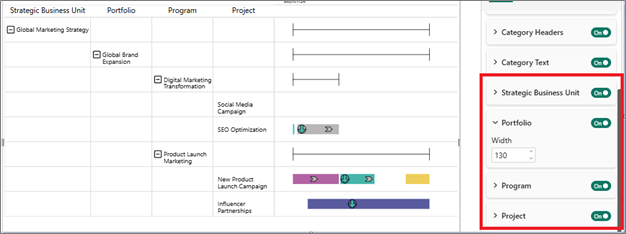
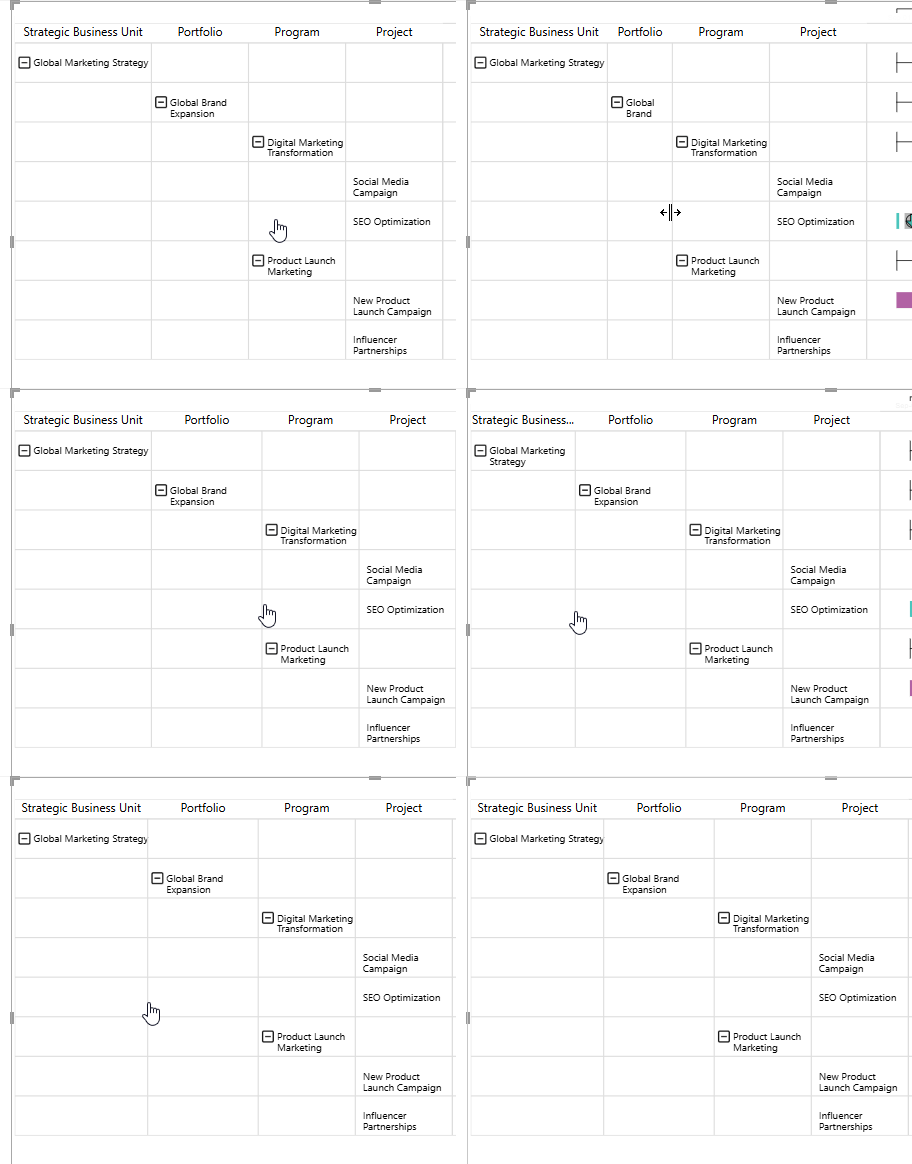
| Dynamic Category Widths | Allows manual adjustment of the width of each category column. Benefit: Ensure proper display of long project or task names, preventing truncation. | Widths can be adjusted manually in the format pane or via drag-and-drop by the report builder. Hidden columns can be configured for data but not display. |
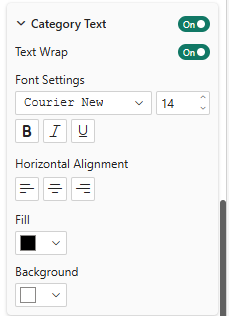
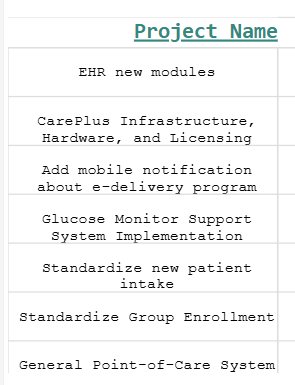
| Category Text | Standard text formatting for project/task names. Benefit: Ensures WBS text is clear and consistent with corporate branding. | Standard font, size, color, and optional text wrap settings are available. |
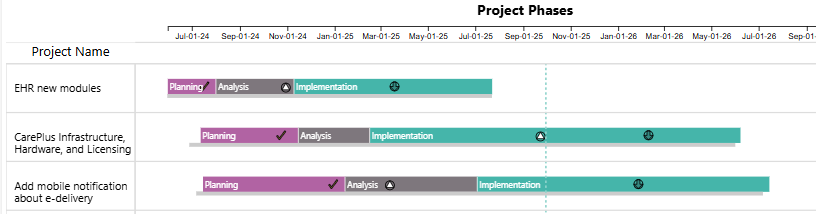
Row height 20:
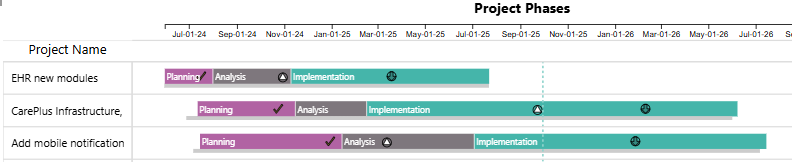
Row height 0:
Category grid with red color and high opacity:

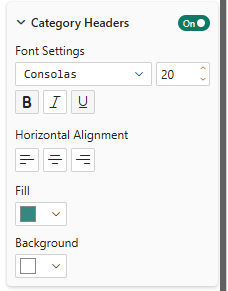
Category Headers text settings:
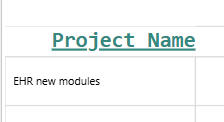
Category text settings:
Additional entries are dynamically created in the Category Format area for each category level. These can be individually hidden from display, and the width of each can be adjusted manually:
Category widths can also be adjusted through drag-and-drop:
Visualizing Work and Progress (Bars)
The Bars section controls the core timeline elements, allowing you to clearly communicate task duration, status, and variance against the original plan.
- Task Bar Display and Sizing
- Display Toggle: Report builders can choose to turn the display of bars on/off in the format area, and report viewers have controls to show/hide them interactively.
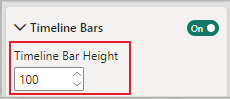
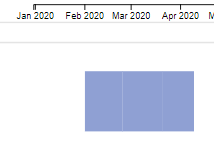
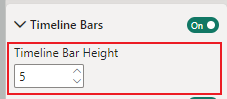
- Bar Height: Adjustable setting to make bars very thick (for emphasis) or very thin (for high-density views).
- Bar Text & Color Coding
| Formatting Option | Purpose & Benefit | Configuration Details |
|---|---|---|
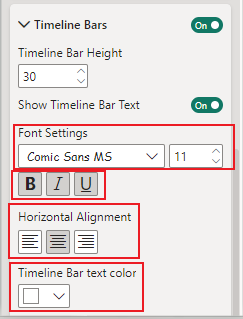
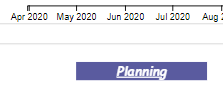
| Bar Text | Displays optional text directly within the timeline bar. Benefit: Add key data points like task ID, resource owner, or critical path status right on the visualization. | Customize font, size, bold/italic/underline, alignment, and color. |
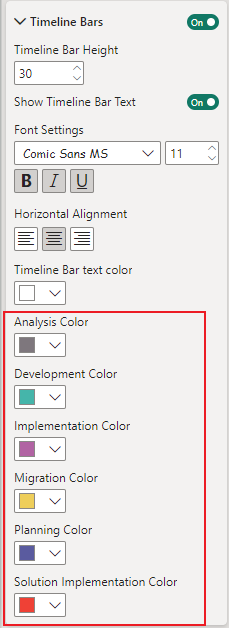
| Category Color Coding | Assigns a unique color to different bar categories in the data (e.g., "Development Task," "Testing," "Client Review"). Benefit: Provides an at-a-glance status or resource allocation map for the entire portfolio. | Color selection available for each unique bar category present in the data. |
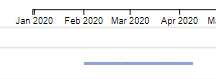
Bar height settings:
Bar text settings:
Bar legend settings:
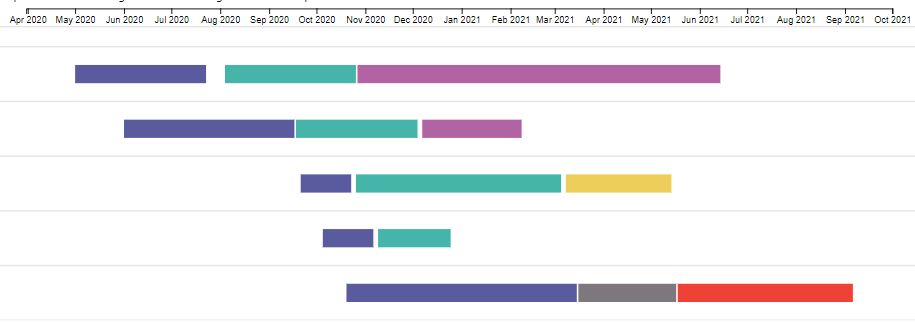
Advanced Progress and Planning Features
| Feature | Business Value | Configuration |
|---|---|---|
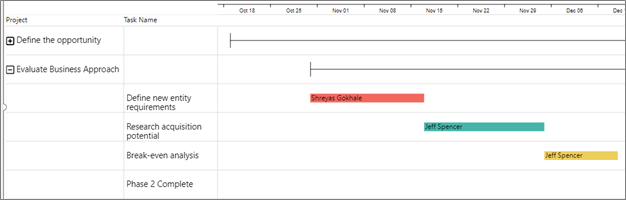
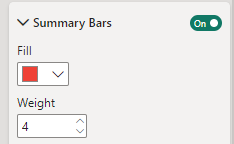
| Summary Bars | Displays tasks and projects in a multi-level hierarchy with collapsible rows. Benefit: Allows Portfolio Managers to quickly drill down from high-level programs to individual tasks, improving reporting efficiency. | Toggle on/off. Customize summary bar color and weight (thickness). Supports displaying milestones and data labels on the summary bar itself. |
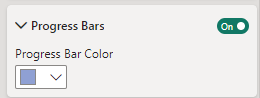
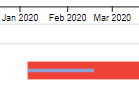
| Progress Bars | Displays a secondary bar inside the main timeline bar representing percent complete. Benefit: Provides immediate, visual feedback on task completion status, crucial for tracking Earned Value or simple status updates. | Toggle on/off. Customizable color for the progress bar. |
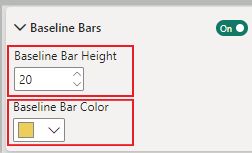
| Baseline Bars | Displays a secondary, thin bar below the main timeline bar. Benefit: Crucial for PMO governance. Visually compares actual progress against the original project plan (the baseline), essential for variance analysis. | Toggle on/off. Customizable height and color for the baseline bar. |
Summary bars:
Summary bar settings:

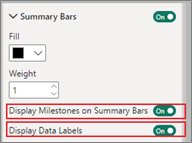

Progress bar settings:
Baseline bar settings:

Highlighting Critical Dates and Interactivity
These features ensure that critical project dates (milestones) are instantly recognizable and that the report is easy for any stakeholder to navigate.
Milestone Icons
Milestones are critical project checkpoints aligned to specific dates.
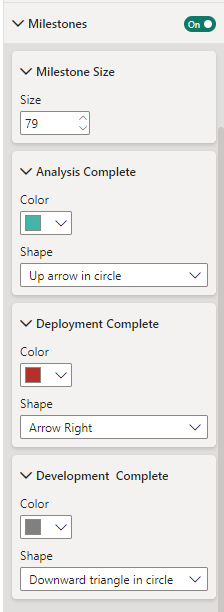
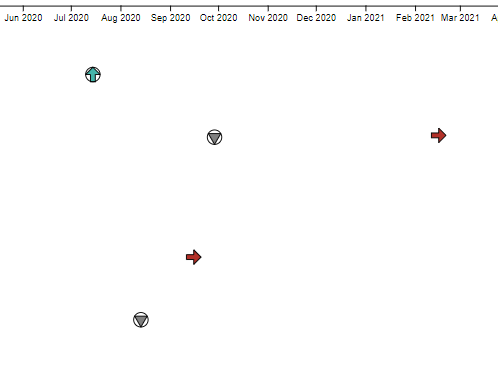
- Milestone Icon Customization: Each milestone category can be assigned a unique icon shape and color.
- Benefit: Enables visual differentiation between critical events, such as "Go/No-Go Decision" vs. "Project Delivery."
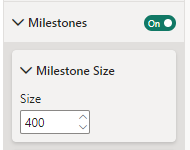
- Configuration: You can choose from 42 different icon shapes and set the icon size and color.
- Display Toggle: Report builders and viewers can toggle the display of all milestones on or off.
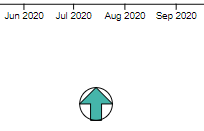
Milestone icon settings:
Data Labels and Readability
Data labels provide critical context for bars and milestones.
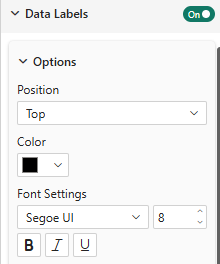
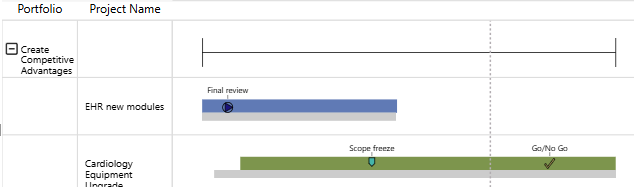
- Label Positioning: Labels can be set to appear on top of or to the right of the Gantt Timeline bars or milestone icons.
- Declutter Labels: This essential feature automatically adjusts label height to prevent text overlap.
- Benefit: Maintains a clean, professional look even in complex, data-dense dashboards, supporting better stakeholder readability.
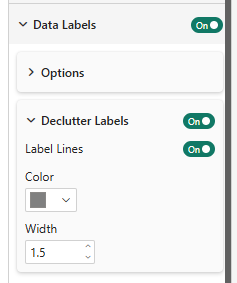
- Configuration: Standard text formatting is available. The data label line color and width are also adjustable.
Data label settings:
Interactivity
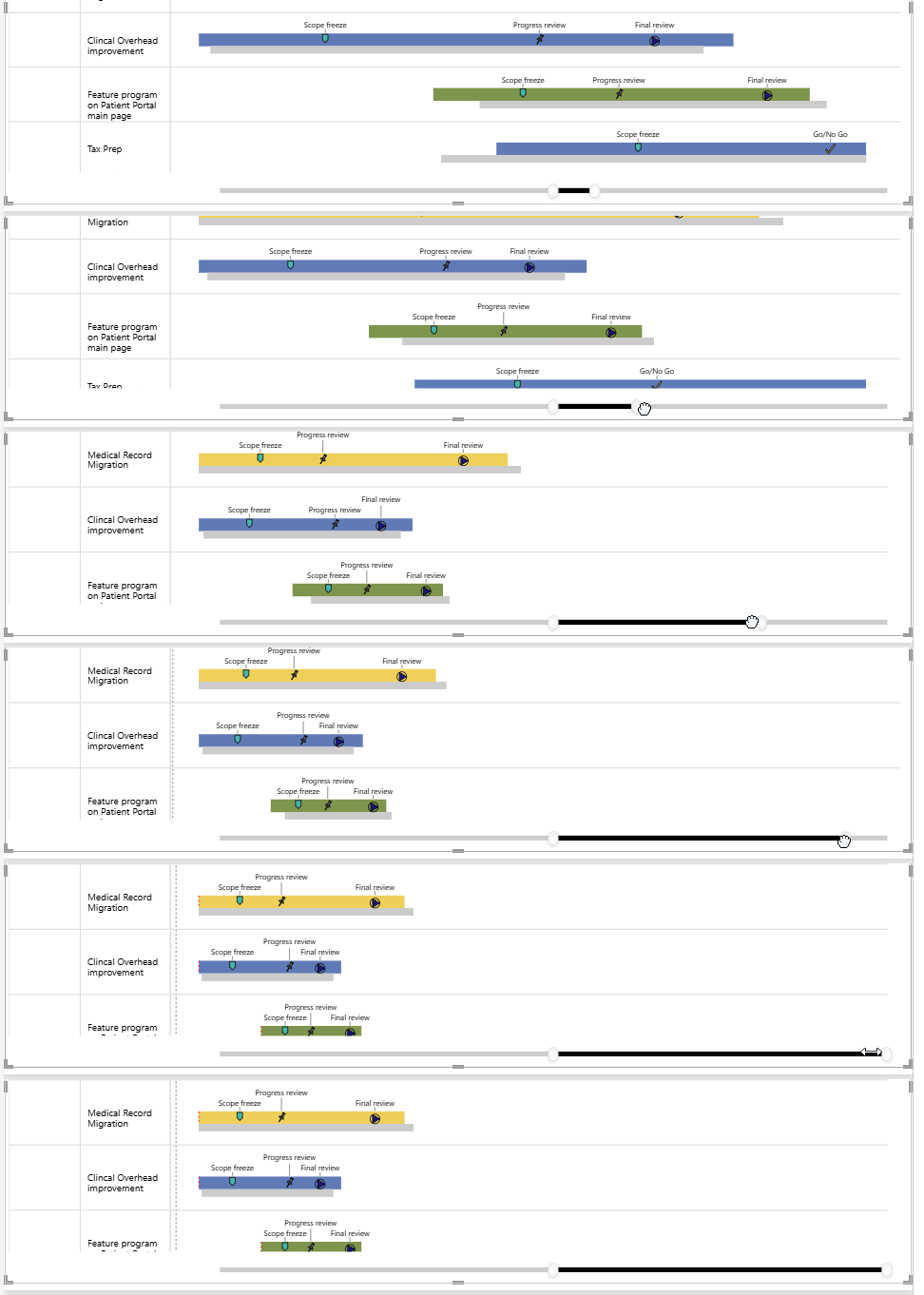
- Zoom Slider: A dedicated control for report viewers to zoom in and scroll across the project timeline. Benefit: Allows deep inspection of specific time periods without altering the underlying report view.